
Most articles about transplant law in India tell you it's "strictly regulated" and leave it there. That's not useful when you're the one filling in the forms.
Here is what the law actually says, which sections it says it in, and what each requirement means for a patient travelling from Tashkent, Moscow, Samarkand or Almaty. Where the rule is unclear or applied differently by different committees, we say so rather than smoothing it over.
The governing law is the Transplantation of Human Organs and Tissues Act, 1994 (THOTA), as amended in 2011, with the Transplantation of Human Organs and Tissues Rules, 2014. It is administered through the National Organ and Tissue Transplant Organisation (NOTTO) and its regional and state bodies.
---
The rule that decides everything: you bring your own donor
Section 9(1) of THOTA prohibits transplanting an organ from a living donor into a recipient unless the donor is a near relative of that recipient.
Section 9(1A), added by the 2011 amendment, deals specifically with people in your position. It requires prior approval of an Authorisation Committee whenever the donor or the recipient is a foreign national. It then adds a proviso that matters enormously:
The Authorisation Committee shall not approve such removal or transplantation if the recipient is a foreign national and the donor is an Indian national, unless they are near relatives.
Read that twice. You cannot arrive in India and find a donor here. An Indian citizen cannot donate to you unless that person is genuinely your parent, child, sibling, spouse, grandparent or grandchild.
Deceased-donor organs are allocated through NOTTO's national waiting list, which prioritises Indian residents. In practice, foreign patients do not receive kidneys through that route.
So the practical position is simple: you travel with your donor, and your donor is a close blood relative or your spouse. If you don't have one, the rest of this article won't help you, and any agency telling you otherwise is describing a criminal offence.
---
Who counts as a "near relative"
Section 2(i) of the Act gives a closed list. There is no discretion in it.
| Relationship | Near relative under Section 2(i)? |
|---|---|
| Spouse | Yes |
| Son, daughter | Yes |
| Father, mother | Yes |
| Brother, sister | Yes |
| Grandfather, grandmother | Yes |
| Grandson, granddaughter | Yes |
| Uncle, aunt, nephew, niece | No |
| First cousin | No |
| Son-in-law, daughter-in-law | No |
| Family friend, colleague, neighbour | No |
Uncles, cousins and in-laws come up constantly in Central Asian and Russian families, where the practical definition of "close family" is far wider than this list. The Act does not care about the practical definition. A cousin is legally an unrelated donor and goes down a different, slower route.
For blood relatives you'll be asked for HLA tissue typing and DNA profiling from an accredited laboratory. For a spousal donation there's no genetic test, but the committee will want the marriage certificate, evidence you've lived together, joint financial records and photographs spanning years. Committees have seen marriages arranged purely to move a kidney, so they look hard.
---
If your donor is not a near relative
Section 9(3) permits donation from someone who is not a near relative, but only where the donation is made "by reason of affection or attachment towards the recipient or for any other special reasons," and only with prior Authorisation Committee approval.
These cases receive heavier scrutiny, because this is exactly where organ selling hides. Expect to document a long-standing relationship, and to produce income tax returns or asset records for both sides to show no money moved. Some committees approve genuine cases; some are cautious to the point of refusal.
Section 9(3A) covers swap donation. If your near-relative donor is incompatible with you (blood group or crossmatch), and another pair is in the same position, the two pairs can exchange donors. Both donors must still be near relatives of their own original recipients. The exchange doesn't loosen the near-relative rule; it just re-pairs people who already satisfy it. This also needs prior committee approval.
If a committee rejects your application, Section 17 gives you thirty days to appeal to the State Government or Central Government, depending on which committee decided. Very few facilitators mention this. It is a real right and the clock is short.
---
Form 21: what your embassy has to sign
For foreign pairs, the central document is Form 21 under the 2014 Rules: a certificate of relationship between donor and recipient.
It is not issued by an Indian hospital or by us. It is issued by your country's embassy or high commission in India, on the basis of an application recommended by the relevant government department in your home country. Where your country has no mission in India, the certification comes from your home government directly.
The embassy certifies the relationship. It does not certify your medical suitability, and it does not certify why no other donor was available. That gap is a known weakness in the system and it's part of why Indian committees interview foreign pairs so carefully.
Practically, this means the paperwork chain starts in Tashkent or Moscow, not in Delhi. Birth certificates, marriage certificates and family records need translation into English and legalisation at home before the embassy in New Delhi will act. Getting this sequence wrong is the single most common cause of a delayed transplant.
You can see the official blank form on NOTTO's site: Form 21, NOTTO.
---
The Authorisation Committee interview
Once your file is complete, an Authorisation Committee reviews it. Under Rule 18 of the 2014 Rules, these committees scrutinise unrelated cases and foreign cases specifically.
The committee sits at hospital, district or state level depending on the case. A hospital-level committee is chaired by the medical director and includes senior doctors who are not part of your transplant team, plus independent lay members. The people deciding are deliberately not the people operating.
You and your donor will be interviewed, usually together with close family, and the interview is typically recorded. They are trying to establish three things: that the relationship is real, that no money changed hands, and that your donor is acting freely and understands what they're agreeing to.
Answer plainly. Committees are experienced at spotting rehearsed answers, and a donor who cannot describe the recipient's daily life is a problem.
---
How long approval takes
Until recently there were no fixed deadlines, and files sat for months while patients deteriorated on dialysis.
That changed with the Delhi High Court's judgment of 4 January 2024 in Amar Singh Bhatia & Anr v Sir Ganga Ram Hospital & Ors, decided by Justice Prathiba M. Singh. The Court held that the absence of fixed timelines defeats the purpose of the statute, and prescribed deadlines for processing applications, completing document verification and scheduling interviews. The broad working figure that emerged is six to eight weeks from a complete filing to a decision. A follow-up order in May 2024 also required committees to notify applicants of documentation deficiencies by WhatsApp or email, so that there is proof the applicant was told.
Two caveats we'd rather give you now than later. First, the clock starts when your file is complete, which is why pre-travel document auditing matters more than anything else. Second, these directions bind authorities within Delhi's jurisdiction most directly; other states have moved at different speeds.
This is also why Carehind's kidney transplant estimate assumes roughly 60 days in India. That figure is built around committee approval, not around surgery, which is a much shorter event.
---
What the law punishes, and why that's good for you
Section 19 covers commercial dealings in organs. The penalty is not less than five years and up to ten years' imprisonment, with a fine of not less than ₹20 lakh and up to ₹1 crore.
Clause (g) of that section is the one to read carefully. It applies to anyone who abets the preparation or submission of false documents, including false affidavits, to establish that a donor is a near relative or is donating out of affection. Falsifying a relationship carries the same sentence as selling a kidney.
Section 18 punishes removing an organ without authority with up to ten years and a fine up to ₹20 lakh. A convicted doctor is reported to the State Medical Council and struck off for three years on a first offence, permanently on a second.
In April 2024, following a trafficking case involving foreign nationals, the Directorate General of Health Services wrote to every state directing them to investigate transplants involving foreign nationals and to suspend hospital registrations where violations were found. The same directive made it mandatory to generate a unique NOTTO-ID for both donor and recipient in every transplant, living or deceased, within 48 hours of surgery.
We're telling you this because it changes the honest advice. Scrutiny of foreign transplants went up in 2024 and has not come back down. A file that would have passed quietly in 2019 gets read properly now. That's inconvenient, and it is also the reason a legitimate transplant in India is safe to pursue at all.
---
Consent your donor can actually read
Section 12 requires the operating doctor to explain all possible effects, complications and hazards of removal and transplantation to the donor and the recipient separately, before proceeding.
If your donor's Russian or Uzbek is their only working language, that explanation is legally incomplete in English. This is the specific point at which translation stops being a convenience and becomes part of the consent being valid.
Carehind assigns a Russian or Uzbek-speaking coordinator who is present for the surgeon's explanation of donor risk, for the committee interview, and for signing. Our staff do not answer for you. Answering for a donor in front of a committee is exactly what invalidates a case.
---
Cost and time, stated plainly
Our current estimate for kidney transplant at partner JCI-accredited hospitals is $13,000, with approximately 60 days in India. You can see the itemised breakdown and adjust it for your case with the cost calculator, or read the full procedure page for kidney transplant in India.
That figure covers the surgical package. Flights, accommodation for you and your donor across a two-month stay, and living costs sit outside it and are worth budgeting separately.
No part of that money is a payment for an organ, and no legitimate provider will ever quote you one. If someone does, Section 19 applies to them and to you.
---
Who handles what
| Task | Who does it |
|---|---|
| Legalising and translating family documents at home | You, with our document checklist |
| Applying to the embassy for Form 21 | You and your donor, in your home country |
| HLA typing, DNA profiling, donor fitness workup | Partner hospital in India |
| Assembling the statutory file for the committee | Hospital transplant coordinator |
| Russian / Uzbek interpretation at consent and interview | Carehind |
| Medical visa invitation, arrival, accommodation | Carehind |
| Approving or rejecting the transplant | Authorisation Committee, independently |
That last line is not a disclaimer. No hospital, agency or surgeon can promise you committee approval, and any promise of it should end the conversation.
---
Questions we get most often
Can I come to India and find a donor here?
No. Section 9(1A) prohibits an Indian national donating to a foreign recipient unless they are near relatives.
My cousin wants to donate. Is that possible?
Not as a near relative. It goes through Section 9(3) as an unrelated donation, with heavier scrutiny and a lower approval rate.
What if my donor and I have different blood groups?
Two options: ABO-incompatible transplant protocols, or swap donation under Section 9(3A) with another incompatible pair. Both need committee approval. Your nephrologist decides which is clinically appropriate.
Can my donor change their mind?
Yes, at any point before surgery, without giving a reason. Consent is not a contract.
How long does the donor stay in hospital?
Donor nephrectomy at our partner centres is usually laparoscopic. Donors are typically discharged within a few days, but should plan to remain in India for the full recovery period alongside you.
What if we're rejected?
Section 17 gives you thirty days to appeal. Get the written reasons for rejection immediately, since the appeal turns on them.
---
The specialists who'd handle your case
These are surgeons and physicians listed on our verified clinical team. Experience figures are as published on their Carehind profiles.
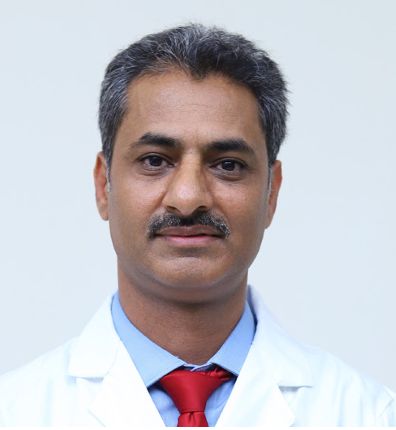
- Dr. Manoj K. Singhal, Director, Nephrology, Medanta. Over 30 years' experience, profile lists 4,000+ kidney transplants. Profile
- Dr. Shafiq Ahmed, Director, Urology, Andrology & Renal Transplant, BLK-Max, New Delhi. More than 16 years' experience, profile lists 3,000+ PCNL and robotic cases. Profile
- Dr. Varun Verma, Associate Director, Nephrology, Max Super Speciality Hospital, Patparganj. 12+ years' experience, profile lists 800+ transplants managed. Profile
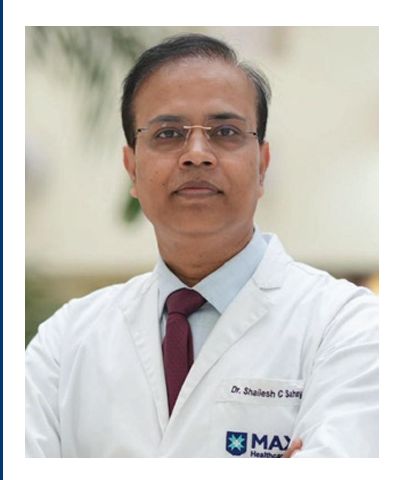
- Dr. Shailesh Chandra Sahay, Director, Urology, Max Super Speciality Hospital, Patparganj. 20+ years' experience. Profile
You can review the full team on our doctors page.
---
Where to start
The useful first step is not booking anything. It's finding out whether your donor qualifies under Section 2(i), and whether your documents can be legalised at home in reasonable time.
Send your recent creatinine and eGFR results, your dialysis history, and your donor's relationship to you, and we'll tell you which statutory route your case falls under before you spend money on anything.
- Get a free itemised estimate (reports reviewed, estimate within 2 hours)
- Kidney transplant procedure guide
- Travel preparation guide for Uzbek patients
- Patient stories
- WhatsApp: +91 63064 57591 · Telegram: bot">@carehindbot
---
Sources
- Transplantation of Human Organs and Tissues Act, 1994 (Act 42 of 1994), as amended. ofhumanorgansandtissuesact,_1994.pdf">India Code, Ministry of Law and Justice
- Form 21, Certificate of Relationship Between Donor and Recipient. NOTTO, Ministry of Health and Family Welfare
- National Organ and Tissue Transplant Organisation. NOTTO, MoHFW
- Amar Singh Bhatia & Anr v Sir Ganga Ram Hospital & Ors, Delhi High Court, judgment of 4 January 2024. Bar and Bench report
- Kher V, Sahay M, Jha PK. Kidney Transplantation in India: Past, Present and Future. Indian Journal of Nephrology. Full text
- Guidelines for Implementation of the National Organ Transplant Programme. 1GUIDELINES04oct2021Approved.pdf">NOTTO, MoHFW
This article explains legal requirements. It is not legal advice and not a substitute for consultation with your treating nephrologist. Last reviewed 1 August 2026.
---
---