

Total Knee Replacement in India
Written by Carehind Clinical Editorial Team
Medically reviewed by Dr. (Prof.) Anil Arora — Medical Reviewer
Published: ·Last reviewed:
Overview
Key Benefits
- ✓Eliminates chronic, debilitating knee joint pain.
- ✓Restores normal leg alignment and walking posture.
- ✓Allows resuming low-impact sports and standard daily activities.
- ✓Exceptional implant longevity, typically lasting 15 to 20 years.
Full Details
Knee Replacement Surgery in India: Real Costs, Real Timelines
A total knee replacement in India costs $5,500 through Carehind. That covers the surgeon, the anaesthesia, an FDA-approved imported implant, five days on the orthopaedic ward, and your pre-operative screening. You spend about 15 days in India. Most of the recovery happens at home, over four to six weeks.
Below is the itemised breakdown, what pushes the number up, and what the two weeks in Delhi actually look like.
What the $5,500 covers
This is the standard package for a single knee, quoted before you travel and confirmed against your X-rays.
| Line item | Cost |
|---|---|
| Pre-operative joint screening and X-rays | $500 |
| Orthopaedic surgeon and anaesthesia fees | $2,500 |
| US-imported premium joint implant (FDA-approved) | $1,500 |
| Five days on the orthopaedic ward | $1,000 |
| Total | $5,500 |
Two things worth saying plainly. First, the implant is a real line item, not a rounding error, and it is the part patients ask about most. Second, this is a package price, not a starting price. You get it in writing after a surgeon reviews your films, and it doesn't move unless your clinical picture changes.
You can check the current figure and timeline any time on the Total Knee Replacement procedure page, or run your own numbers through the cost calculator.
What changes the price
The $5,500 assumes one knee, a standard total replacement, conventional technique. Several things move it:
Both knees at once. Doing both in a single anaesthetic session costs less than two separate trips, but it is not simply double or half. It depends on your cardiac clearance, your age, and how well you're likely to tolerate a longer operation. Carehind quotes bilateral cases individually. There is no fixed price, and anyone who gives you one over the phone without seeing your films is guessing.
Partial instead of total. If only one compartment of the joint is worn, a unicompartmental replacement is a smaller operation with a shorter recovery. Not everyone qualifies. Your surgeon decides this from your standing X-rays, sometimes only once he is inside the joint.
Robotic assistance. Carehind coordinates robotic-assisted knee replacement where a surgeon recommends it or a patient asks for it. It adds cost. It is worth discussing on your consultation call rather than deciding from an article, because the honest answer is that registry evidence on long-term robotic outcomes is still maturing, and a high-volume surgeon using conventional instruments produces excellent results.
Implant choice. Carehind sources implants internationally rather than restricting you to one manufacturer. Higher-specification bearings and high-flexion designs cost more. Whether they benefit *you* depends on your age, your build, and how you plan to use the knee. Ask your surgeon to justify the upgrade before you pay for it.
Revision surgery. Replacing a failed implant is a different, longer, more expensive operation. It is quoted case by case.
How this compares internationally
The cost gap is real, but the waiting time gap matters just as much for most patients.
| Country | Typical private cost per knee (USD) | Access |
|---|---|---|
| United States | $30,000 – $65,000 | Fast privately, insurance-dependent |
| United Kingdom | $15,000 – $35,000 | Private is fast; NHS elective orthopaedics is among the most pressured specialties |
| Germany | $15,000 – $25,000 | Regulated pricing, moderate private access |
| Turkey | $5,000 – $8,000 | Established medical travel market |
| India (Carehind) | $5,500 | Surgery scheduled within weeks |
*Cost ranges outside India are indicative market figures compiled from published price surveys and require independent verification before you rely on them. The India figure is Carehind's own quoted package price.*
On waiting times, the NHS publishes its own numbers. Under the NHS Constitution, patients have a right to start non-urgent consultant-led treatment within 18 weeks of referral, and as of March 2026 the median wait across all specialties was 11.3 weeks. Trauma and orthopaedics runs longer than the average, and that is before you reach the surgical date itself. You can check the current figures directly on the NHS England referral-to-treatment statistics page.
Why is India cheaper? Lower facility and staffing overheads, high surgical volume across a small number of centres, bulk procurement agreements with implant manufacturers, and much lower malpractice insurance costs. None of those things touch the implant you receive or the surgeon's technique.
Is it safe? The honest numbers
Knee replacement is one of the most studied operations in medicine, so you don't have to take a facilitator's word for it.
Complications. The American Academy of Orthopaedic Surgeons puts it directly: the complication rate after total knee replacement is low, and serious complications such as joint infection occur in fewer than 2% of patients. A 2024 meta-analysis of periprosthetic joint infection after primary knee replacement found a pooled prevalence of roughly 1%, with real variation between regions and hospitals.
You will see medical tourism sites quote infection rates below 0.5%. Treat those with suspicion. They are usually single-centre figures with short follow-up, and they are not comparable to registry data.
How long the implant lasts. The UK National Joint Registry tracks every joint replacement in England and Wales. Its data puts all-cause survivorship of total knee replacements at 96.7% at 10 years and 95.4% at 15 years. The American Joint Replacement Registry reports a 10-year revision rate of 2.13% for cemented total knees. In plain terms: most knees outlast 15 years, and a small minority need revision earlier.
What accreditation means. Carehind's partner hospitals hold Joint Commission International accreditation, which is an external audit of clinical care, patient safety and infection control, repeated on a cycle rather than granted once. Indian hospitals also hold NABH accreditation, the national standard. Accreditation is a floor, not a guarantee, but a hospital without it should give you pause.
Your own risk profile matters more than the country. Diabetes, obesity, smoking and low albumin all raise infection risk substantially, and they raise it in Delhi exactly as much as in Berlin. If your HbA1c is poorly controlled, the useful conversation is about optimising it before surgery, not about which hospital to choose.
Who operates
Carehind works with a verified roster, and every surgeon listed has a public profile you can read before you commit.
Dr. (Prof.) Anil Arora is Chairman and Head of Department for Orthopaedics and Joint Replacement Surgery at Max Super Speciality Hospital, Patparganj. Twenty-five-plus years of practice, more than 10,000 joint replacements. He is the clinical reviewer on Carehind's knee replacement content. If you are having a straightforward primary knee replacement, he is the surgeon you will most likely meet. His profile is here.
Dr. Neeraj Gupta is Director of Paediatric Orthopaedics, Deformity Correction and Limb Reconstruction at Fortis Healthcare, with 22 years of practice and more than 9,000 surgeries. His specialism is relevant if your knee problem involves significant deformity, previous trauma, or limb-length issues rather than straightforward arthritis. His profile is here.
You speak to the operating surgeon on a video call, with a Russian or Uzbek interpreter present, before you book a flight. Not a coordinator relaying answers. The surgeon.
The full clinical team is listed here.
Your 15 days in India
| Days | What happens |
|---|---|
| Before you fly | Surgeon reviews your standing X-rays and history by video. Written quote issued. |
| Day 1 | Airport pickup in Delhi. Hotel or hospital check-in. Interpreter meets you. |
| Days 2–3 | Pre-operative workup: bloods, ECG, cardiac clearance, anaesthesia review. |
| Day 4 | Surgery. |
| Day 4 (evening) or Day 5 | You stand, with a walker, usually within 24 hours. |
| Days 5–8 | Ward stay. Daily physiotherapy. Pain managed with regional blocks. |
| Days 9–14 | Discharge to hotel. Daily outpatient physio. Wound checks. |
| Around Day 13–14 | Sutures or staples out. Standing X-ray to confirm implant position. |
| Day 15 | Fit-to-fly clearance. Home. |
Standing on day one sounds aggressive. It isn't. Early weight-bearing reduces the risk of deep vein thrombosis and produces better range of motion at three months. It is standard practice, not an Indian shortcut.
Recovery after you fly home
This is the part most cost comparisons skip, and it is the part that determines your result.
Weeks one to six at home are daily physiotherapy. You'll be walking without support somewhere in that window, most people around week four to six. Around month two, the goal is 120 degrees of flexion, enough to climb stairs normally and get in and out of a car without thinking about it. By month three, most patients are back to walking distances, swimming, cycling and a normal working day.
Two honest caveats. Some stiffness and clicking is normal and permanent, and kneeling directly on the joint is uncomfortable for many people long-term. And a small number of patients continue to have pain after an otherwise technically perfect operation. It is uncommon, but it happens, and no surgeon can promise you it won't.
Carehind coordinates remote follow-up by video with your operating surgeon after you return. Bring your local physiotherapist into that loop early.
AAOS publishes free patient exercise guidance that your physiotherapist can work from: Total Knee Replacement Exercise Guide.
Visa and paperwork
Knee replacement carries none of the legal machinery that organ transplants do. There is no authorisation committee, no relationship affidavit, no government clearance.
You need an e-Medical Visa, applied for online at the Indian government's official e-Visa portal. The hospital issues a medical invitation letter first, which Carehind arranges. Up to two family members can travel with you on e-Medical Attendant Visas, and they must be blood relatives.
Passports need six months' validity. Do not apply through a third-party site that charges a service fee. The government portal is the only one you need.
What isn't included
Budget separately for:
- International flights
- Hotel beyond the hospital stay, roughly 10 to 12 nights
- Meals for you and anyone travelling with you
- Local transport not covered by transfers
- Any medication you continue at home after discharge
Carehind gives you a realistic figure for these before you book, so the total is a total and not a surprise.
FAQ
Can both knees be replaced during the same trip?
Yes, in a single anaesthetic session, if your cardiac clearance supports it. It costs less than two separate trips but is quoted case by case. Your surgeon makes the call after reviewing your workup.
What is the implant made of?
A cobalt-chromium or titanium alloy femoral component, a metal tibial tray, and a polyethylene bearing between them. Carehind sources FDA-approved implants internationally rather than restricting you to a single manufacturer.
How much can I bend the knee afterwards?
Most patients reach around 120 degrees, which covers stairs, cars and normal chairs. High-flexion implants can go further, but your final range depends as much on your pre-operative stiffness and your physiotherapy as on the implant.
Do I need to speak English?
No. A Russian or Uzbek interpreter is with you for the surgeon consultation, ward rounds, physiotherapy sessions and discharge instructions.
How soon can I fly home?
Fit-to-fly clearance is usually granted around day 15, after a standing X-ray confirms implant position and you can walk independently with a walker. Long-haul flights carry a raised clot risk after joint surgery, so follow the compression and mobility instructions you're given.
Will my insurance at home cover this?
Usually not, and you should assume not unless your insurer confirms in writing. Most Carehind patients are self-paying. Ask your insurer specifically about elective surgery performed abroad.
How long does the implant last?
Registry data from the UK National Joint Registry shows 96.7% of total knee replacements still in place at 10 years and 95.4% at 15 years.
What if something goes wrong after I get home?
You have direct video access to your operating surgeon for follow-up. For anything acute, you see a local doctor first, and Carehind coordinates the clinical handover so your surgeon in Delhi has the picture.
Next step
Send your standing knee X-rays and a short medical history. A surgeon reviews them and you get a written, itemised estimate back, usually within two hours.
- WhatsApp: +91 63064 57591
- Telegram: @carehind_bot
- Book a video consultation: carehind.co/booking
If you'd rather read first, the Total Knee Replacement procedure page has the current package price and timeline, and patient stories are here.
Why Needed?
Indicated when severe bone-on-bone osteoarthritis makes normal walking or stairs climbing impossible and does not respond to conservative medication.
Indicative Symptoms
- •Severe knee pain limiting mobility
- •Joint stiffness, locking, or regular swelling
- •Bow-legged or knock-kneed deformity
- •Knee pain at rest that prevents sleeping
Timeline Urgency
Moderate: Postponing joint replacement leads to progressive muscle atrophy and bone loss, hindering post-op rehabilitation.
Recovery Timeline
Phase 1: Post-Op Rehab
Resurfacing surgery followed by immediate knee mobilization exercises. Patients stand and walk using a walker on day 1.
Phase 2: Walk Support
Discharged to hotel apartments. Continuous passive motion (CPM) therapy and progressive quad exercises.
Phase 3: Active Flexion
Return to home country. Daily home physical therapy to achieve 120-degree knee flexion and walking without crutches.
Phase 4: Full mobility
Normalized gate cycle. Return to active walking, low-impact swimming, cycling, and routine office life.
Cost Breakdown
| Service Type | Estimated Cost |
|---|---|
| Pre-Op Joint Screenings & X-rays | $500 |
| Orthopedic Surgeon & Anesthesia Fees | $2,500 |
| US-Imported Premium Joint Implant (FDA) | $1,500 |
| 5 Days Hospital Stay (Orthopedic Ward) | $1,000 |
| Total Knee Joint Replacement Cost | $5,500 |
Our Clinical Team
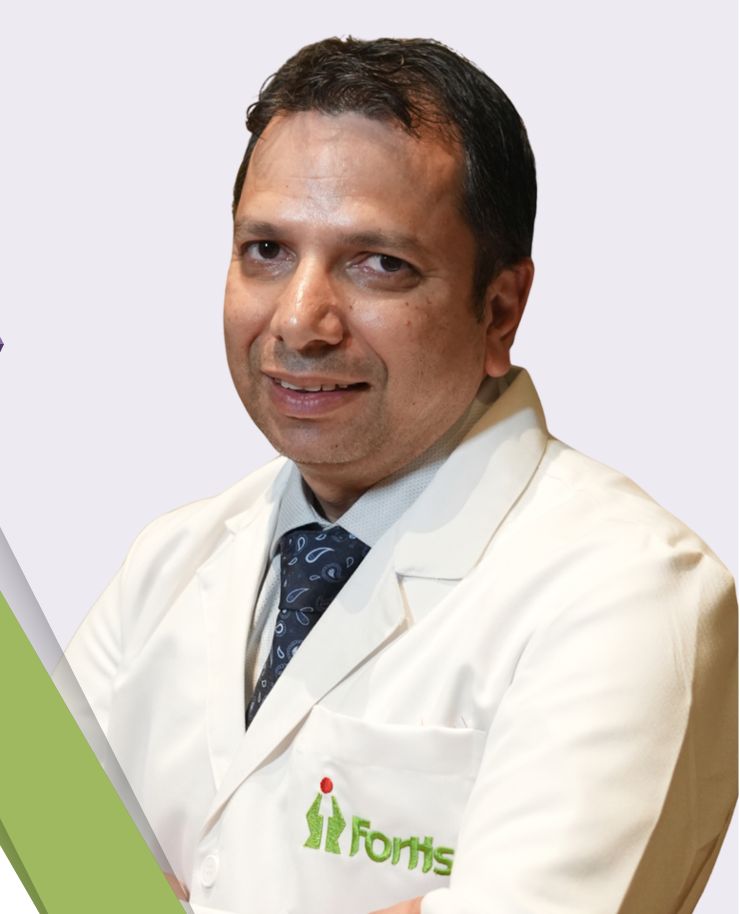
Dr. Neeraj Gupta
Director - Pediatric Orthopaedics & Deformity Correction & Limb Reconstructions
 Anil Arora-carehind.jpg)
Dr. (Prof.) Anil Arora
Chairman & Head of Department - Orthopaedics & Joint Replacement Surgery
Patient Story
Elena K.
Almaty, Kazakhstan"Carehind made my bilateral knee replacement stress-free. From airport pickup to finding the hotel near Max hospital and coordinating our pre-op tests, everything was handled with extreme professionalism."
International Guides
Treatment estimates and guides for international patients: